|
Friday, 13 February 2026
quote [ From Foreigner to Lynyrd Skynyrd, a number of legacy acts are touring without any of their original members. Audiences don’t seem to care. ]
On the ship of Theseus
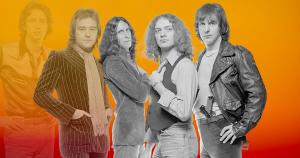
Reveal Recently, veteran concert promoter Joe Fletcher was sent a brief to gauge his interest in organizing a show for REO Speedwagon, the rock balladeers whose hits “Can’t Fight This Feeling” and “Keep on Loving You” soundtracked many people’s lives in the 1980s. Fletcher was intrigued — there are plenty of ticket buyers out there who want to relive their Hi Infidelity days — until the contract revealed itself to be a bit duplicitous in nature. “When I read the fine print, it was ‘an experience with REO Speedwagon’s music.’ It’s none of the original members,” Fletcher recalls. “I don’t want to promote the show unless it’s the real thing. I don’t know why you would want to see that. It’s just a cover band. To me, that’s a little bit strange.” He adds, with a sigh, “If there are no original members, who cares?” It’s a question, however philosophical, that many fans are being challenged with in 2026: At what point does a band cease to exist and become something else entirely? The two biggest names so far who have Ship-of-Theseused themselves to extend their legacies are Foreigner and Lynyrd Skynyrd, who will be embarking on a duel “Double Trouble Double Vision Tour” this summer — both consistently tour without any original members, instead handpicking and training other musicians to perform their material on the road. The Spinners and the Four Tops, popular vocal groups that emerged in the 1950s, have the same arrangement for their current lineups, as do the rockers Iron Butterfly, the Grass Roots, and Blood, Sweat & Tears. Of course, the circumstances for why each band lost their personnel varies, such as illness (Mick Jones), death (the 1977 Skynyrd airplane crash), and the inevitable need for retirement. But they’re all united by the fact that they still want to keep their music alive, even if some fans are skeptical that this is a fair endeavor when someone other than Lou Gramm is burning down the stage each night to “Juke Box Hero.” “Fuck those people,” engineer and producer Ron Nevison says about those who disagree with this burgeoning industry trend. “This should be about the songs and music, not about the members. The songs transcend them all.” Nevison, who began his career with the Who’s Quadrophenia and worked with Lynyrd Skynyrd on their transitional 1999 album, Edge of Forever, believes the power of “Freebird” and “Sweet Home Alabama” hold more weight than whoever is on Skynyrd’s current roster, which includes Rickey Medlocke — who was briefly in the band in the early ’70s — and Johnny Van Zant, the younger brother of original front man Ronnie. “I don’t think, for the most part, they care that every single band member is there,” he says of fans. “All of the families support them and want them to keep going. It will be interesting to see, in 20 more years, if there’s another Lynyrd Skynyrd still going on with the sons and daughters of the band.” Nevison points to Kiss, in particular, for creating a template to succeed indefinitely should they choose to mutate. “I’ve always looked at them like Kabuki theater with their makeup and everything,” he says. “They’re interchangeable parts. It’s just entertainment.” Al Greenwood, a Foreigner co-founder, is as surprised as anyone that his band continues to have a life beyond its classic era. He credits Jones, “a creative genius,” as being the hot-blooded architect of every iteration who handles the auditions and selection process for new members. “They’re very respectful of the band’s sound. They ask a lot of questions: ‘How did we do this? How did you play that? What sounds did you get?’ They want to get it right,” the keyboardist says of the newbies. “We call it the Foreigner family.” Greenwood, who departed the group in 1980 after the Head Games album, occasionally joins the band for special appearances, as does Gramm. His age, though, precludes him from doing anything more extensive than a one-off show. “We’re in our mid-70s or early 80s, so it’s hard for us to go out anymore,” he says. “We’re physically too old to tour for any length of time. Traveling is the worst part. We can’t do it the way we want. These songs are very hard. We have to pass the baton to these new players who can do it.” Jones, who has Parkinson’s disease, has never broached a conversation about whether Foreigner should change its name to better suit its current direction. For some artists, coming in and continuing the legacy of an established group is the highest calling. Jessie Peck, now the longest-reigning member of the Spinners, was chosen for such a role in 2008 by founders Henry Fambrough and Bobby Smith prior to their respective retirements. Peck performed side-by-side with Fambrough until his death in 2023, a time frame that allowed Peck to grow more confident in his abilities and better grasp why his heroes were keen on this arrangement. “I was told by the Spinners, ‘You are a Spinner. You are my brother,’” he explains. “That said, I’ve never addressed the issue of, ‘Are we still the Spinners or are we something else?’ The people who have those conversations are the people who don’t buy tickets, anyway, and who aren’t going to concerts.” Peck says he would perhaps change his opinion if the demand wasn’t there and the Spinners weren’t filling venues — “Working My Way Back to You” and “The Rubberband Man” are crowd-pleasers, enhanced by a ton of smooth choreography — but he understands those who choose not to attend out of loyalty to the original members. “Those naysayers, the only way I could change their mind is if they come to the show,” he says. “If they come, they’ll realize that the Spinners are still here. Their spirit still dwells among us and it’s a wonderful walk down memory lane. I’d have to plow through a thousand or more fans to get to the folks that are saying, ‘Oh, you’re a tribute band. You’re not real — stone them!’ We’re doing fine.” The main validation he and his three other ordained Spinners need, Peck insists, is “selling out shows.” Having worked in promotion and artist management since 1991, Fletcher has witnessed the transition to more and more bands embracing this form. One of these groups, the Temptations, he even used to work with. “I remember thinking, This is bizarre,” Fletcher recalls of the phenomenon. “It’s kind of a shame because these were pretty significant groups when they first came out. And now we see this watered-down, Vegas version of people covering the music. It’s not authentic.” He acknowledges, though, that heart and intent go a long way with managing expectations, and some bands are more successful at pulling it off than others. Lynyrd Skynyrd, for example, has made big business out of their summer amphitheater tours over the years, while Foreigner is deviating from their usual arena-forward approach this spring to travel with a symphony orchestra. “Some of these groups have been able to keep a valuable product out there,” Fletcher admits. “If you have enough hits, people will come out and probably see a good show.” It’s a sentiment that Greenwood shares, even if he’s often relegated to watching his band from the sidelines. “I hope it goes on forever,” he says of the Foreigner name. “Let’s face it: The music really stood the test of time.” In fact, Greenwood knows it’s only a matter of years before all of his rock contemporaries will be faced with a similar decision. “It’s a polarizing topic,” he says, “but as we age out, it’s impossible to keep it going.” He points to a band like the Rolling Stones, which still has two original members in Mick Jagger and Keith Richards, to consider taking a cue from Foreigner when the time comes. “They have to go on forever,” Greenwood says. “If they could find people who can fill those shoes, that would be incredible because the music is brilliant. I wouldn’t like to not be able to see that music being played.”
|
Comments
 |
mechanical contrivance said @ 4:09pm GMT on 13th Feb
People seem to like live music, and they like hearing their favorite songs.
|
Post a comment
[note: if you are replying to a specific comment,
then click the reply link on that comment instead]You must be logged in to comment on posts.